

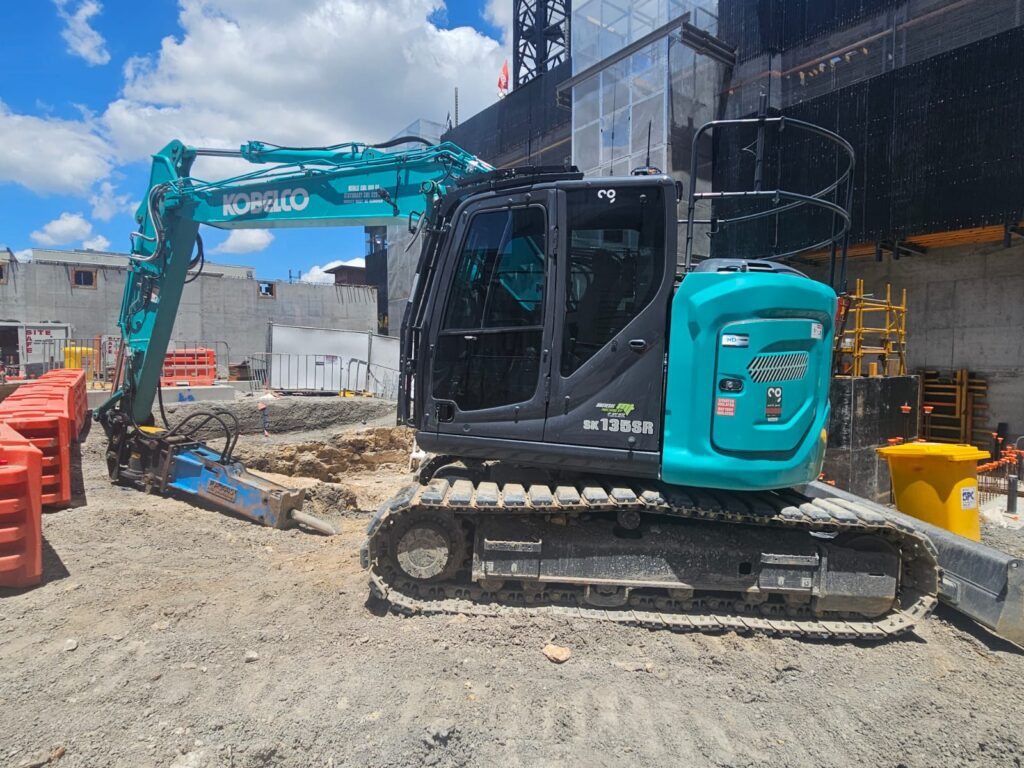
Hard ground conditions are a reality across much of Queensland. Dense basalt, buried rock layers, and reinforced concrete remnants are common on civil construction sites and can quickly slow excavation if not managed correctly. When standard digging attachments reach their limits, productivity drops, machines take unnecessary strain, and timelines come under pressure. Selecting the right hydraulic rockbreakers for civil excavation projects will help to dissolve all of these issues.
Hydraulic rockbreakers are designed specifically for these conditions. By delivering controlled impact energy, they fracture hard material methodically rather than forcing it apart through repeated digging passes. When correctly matched to the excavator and ground conditions, rockbreakers support consistent progress, reduce machine stress, and help civil projects stay on schedule.
This guide outlines how hydraulic rockbreakers are used across earthworks and excavation projects, where they deliver the most value, and how correct selection, operation, and maintenance contribute to efficient outcomes on site.
Why Hydraulic Rockbreakers Are Critical on Hard Ground Civil Sites
Maintaining progress when excavation stalls
On many sites, excavation begins smoothly using standard buckets or trenching attachments. Progress can slow abruptly when dense rock or compacted layers are encountered. Buckets lose penetration, multiple passes are required, and productivity declines.
Hydraulic rockbreakers restore momentum by conditioning the ground. Rather than relying on leverage, they apply concentrated impact energy to fracture hard material progressively. This allows excavation to continue without forcing the excavator beyond its intended operating limits.
Reducing strain on excavators and attachments
Repeated digging in hard material transfers high loads back through pins, bushings, hydraulics, and structural components. Over time, this increases wear across both the machine and attachments.
By fracturing material before excavation resumes, hydraulic rockbreakers reduce resistance at the bucket edge. This allows other attachments to operate within their designed range, supporting more consistent performance and reducing long-term wear across the fleet.
Adapting quickly to changing ground conditions
Civil sites rarely have uniform ground profiles. One section may excavate easily, while another contains buried rock or reinforced concrete from previous works. Changing machines or reworking excavation plans introduces delays.
Rockbreakers give site teams flexibility. When resistance increases, the breaker is introduced to condition the ground, then excavation continues. This adaptability is particularly valuable across Queensland civil projects, where subsurface conditions often change without warning.
Supporting controlled work near services and structures
Many excavation tasks occur close to existing services, footings, or live structures. Excessive force or uncontrolled breaking increases risk in these environments.
Hydraulic rockbreakers allow operators to focus impact precisely where required. This controlled approach supports safer excavation near sensitive areas while maintaining productivity.

Key Applications of Hydraulic Rockbreakers in Civil Excavation
Hydraulic rockbreakers are most effective when used deliberately at specific stages of excavation rather than continuously. Understanding where they add value helps teams use them efficiently.
Hard rock trenching and service installation
Standard trenching methods rely on material breaking under cutting force. Dense rock layers resist this action, leading to shallow cuts, uneven trench walls, and increased machine stress.
Rockbreakers are used to fracture hard layers ahead of excavation. Once the material is conditioned, buckets can re-enter the trench cleanly, maintaining consistent depth and alignment. This is critical for drainage, utilities, and pipeline installations where tolerances matter.
Demolition of reinforced concrete
Reinforced concrete behaves differently to natural rock. Steel reinforcement holds fractured concrete together, making removal more complex.
Hydraulic rockbreakers allow controlled, progressive demolition. Impact energy is concentrated to break concrete into manageable sections, exposing reinforcement and enabling staged removal. This approach reduces vibration, improves accuracy, and limits disruption to surrounding structures.
Site preparation and boulder reduction
Large boulders, buried rock, or leftover concrete often emerge during bulk earthworks. Attempting to excavate around them can compromise pad levels and alignment.
Rockbreakers reduce oversized material in place, allowing removal or repositioning without introducing additional machines. This keeps site preparation moving and avoids unnecessary changes to excavation plans.
Choosing the Right Hydraulic Rockbreaker for Your Excavator
Effective performance depends on correct pairing between the breaker, the excavator, and the task.
Matching breaker hydraulics to the carrier
Excavators operate within defined hydraulic flow and pressure ranges. A breaker that is mismatched can underperform or experience accelerated wear.
Selecting a breaker that aligns with the excavator’s hydraulic output ensures efficient energy delivery without overstressing the system. Breaker selection should always start with the carrier machine.
Considering excavator size and operating weight
Oversized breakers can affect balance and control on smaller machines, while undersized breakers may struggle on larger carriers.
Choosing a breaker within the recommended carrier weight range supports stability, accuracy, and consistent breaking performance — especially in confined areas or narrow trench lines.
Factoring in ground conditions and duty cycle
Dense basalt requires higher energy per blow, while mixed or softer materials benefit from controlled, consistent impacts. Projects that involve intermittent ground conditioning have different requirements to extended demolition work.
Understanding how often and how long the breaker will be used helps ensure it is suited to the expected duty cycle.
Tool selection and wear management
Chisel tools concentrate force for penetration, while blunt tools spread impact for surface breaking. Correct tool selection improves efficiency and reduces unnecessary wear.

Dry Hire Rockbreakers with earth gear’s PEAK Attachments range
Access to the right attachment is only part of effective excavation. Consistent outcomes depend on correct selection, condition, and support.
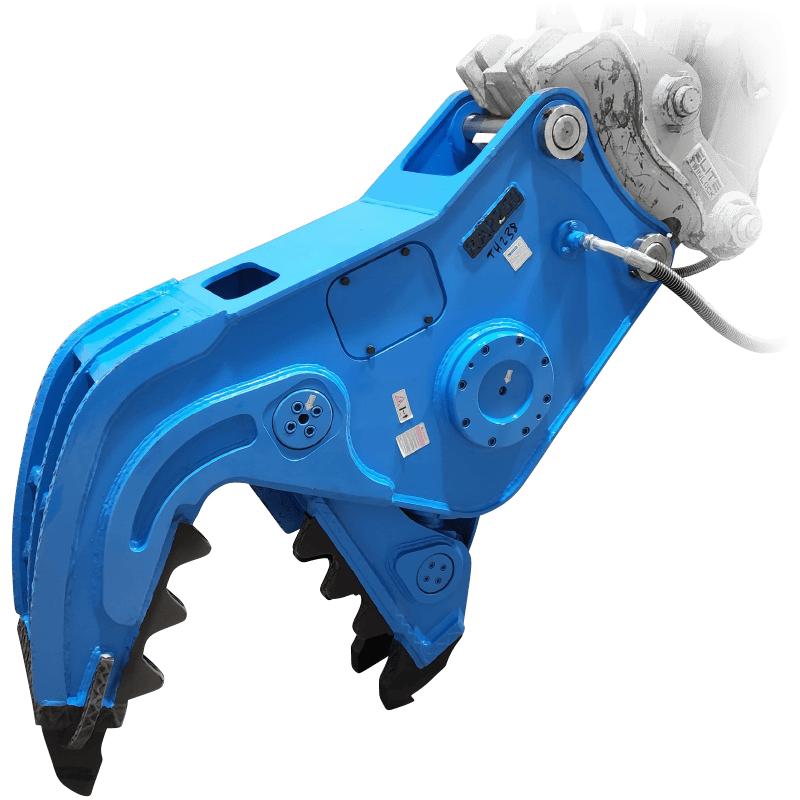
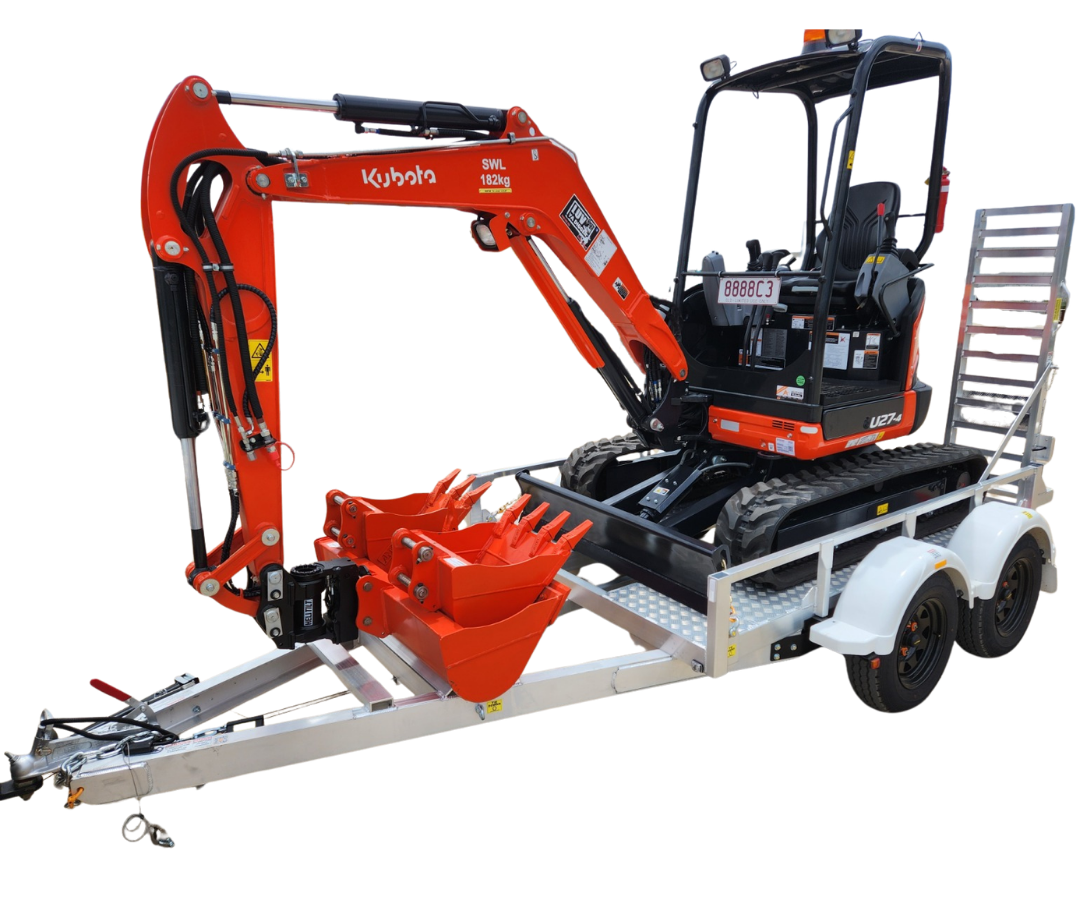
We supply low-hour excavators through a flexible dry hire model, giving civil contractors control over site operations. Our PEAK Attachments range includes hydraulic rockbreakers matched to a wide range of excavator sizes and civil applications.
Because rockbreakers are often used intermittently, PEAK attachments are maintained to deliver reliable performance when needed. Our team supports correct pairing based on machine hydraulics, ground conditions, and expected duty cycle — helping crews apply breakers with purpose rather than trial and error.
With local support and a focus on machine and attachment compatibility, we help civil teams maintain steady workflows even as ground conditions change.
👉 Explore earth gear machine dry hire
👉 View the PEAK Attachments hydraulic rockbreaker range
Using Rockbreakers Effectively Across Civil Projects
Hydraulic rockbreakers for civil excavation are not a replacement for standard excavation — they are a precision tool used when conditions demand it. When introduced deliberately, they restore control, protect machines, and support predictable progress in hard ground.
For civil construction teams, the advantage lies in understanding where rockbreakers fit within the broader excavation process. With the right attachment, matched correctly and supported through dry hire, tough ground becomes manageable — not a delay.