

Across South East Queensland, equipment procurement is becoming less about finding an available machine and more about protecting the certainty of the construction program.
The distinction matters. A machine may be available in the right weight class, but that does not necessarily mean it is ready for the intended workfront. It must arrive when required, carry the correct attachments, satisfy project requirements and remain supported throughout the hire.
With major projects progressing across Brisbane, the Sunshine Coast, Gold Coast, Logan, Ipswich and Moreton Bay, construction teams have less room for variability. Reliable equipment supply has therefore moved beyond a procurement consideration. For many contractors, it is now part of program planning, production management and operational risk control.
A larger project pipeline is raising the stakes for equipment planning
The scale of Queensland’s forward workload provides important context. The Queensland Major Projects Pipeline Report 2025 valued the state’s five-year major-project pipeline at $127.5 billion, including funded and unfunded activity. Funded activity alone reached $78.1 billion.
The same report identified $11.7 billion in funded major-project activity across Greater Brisbane and $6.7 billion on the Sunshine Coast.
Roads and bridges, rail, water infrastructure and Brisbane 2032-related works all form part of the regional picture.
The challenge now has evolved beyond the volume of work. It includes the concurrency of projects, packages and workfronts competing for plant, labour, transport and specialist support.
The Coomera Connector Stage 1 program illustrates the scale involved. Its approximately 16-kilometre corridor is being delivered through North, Central and South construction packages. This is not evidence of an equipment-supply issue on the project. It does, however, show how a single infrastructure program can create several overlapping plant requirements across different locations and stages of delivery.
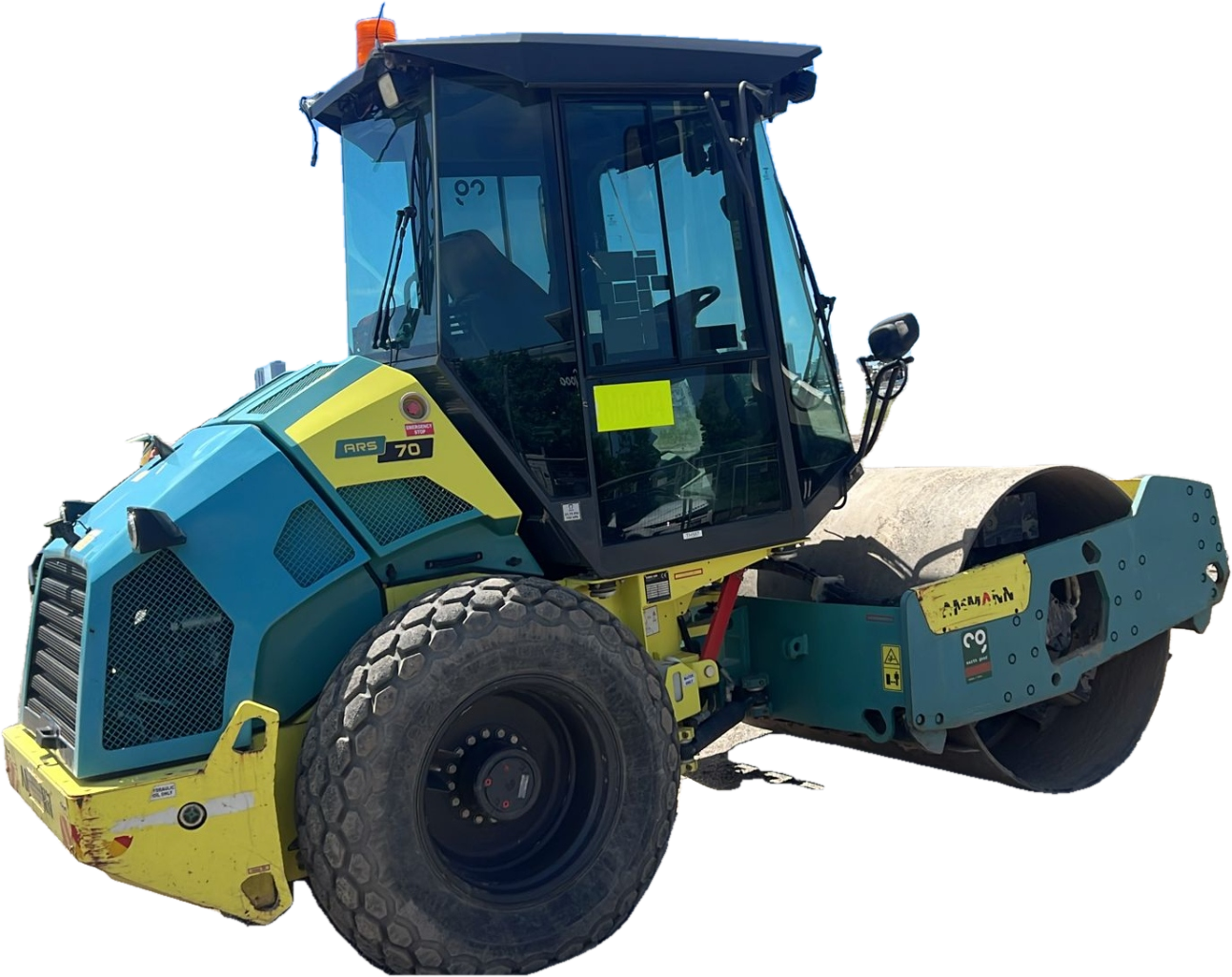
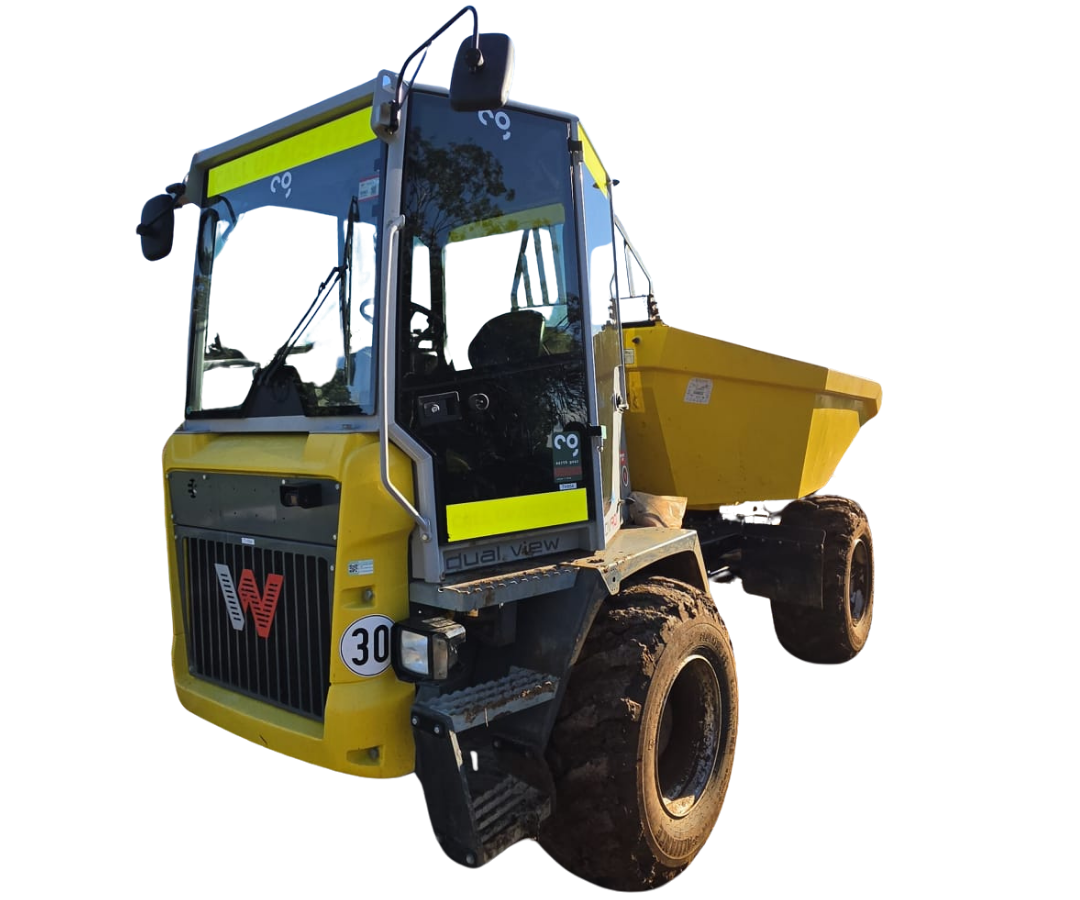
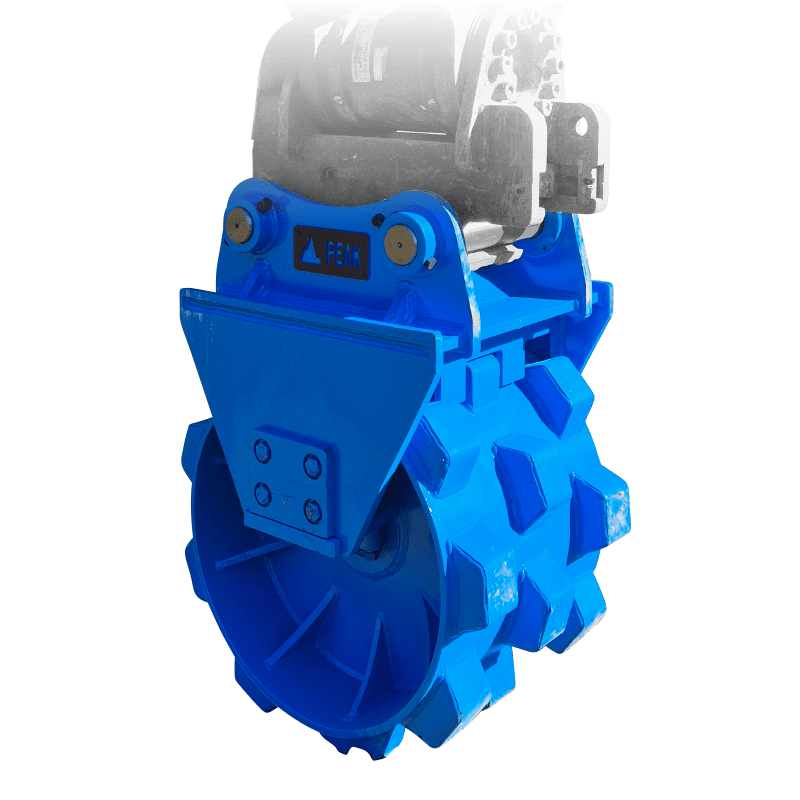
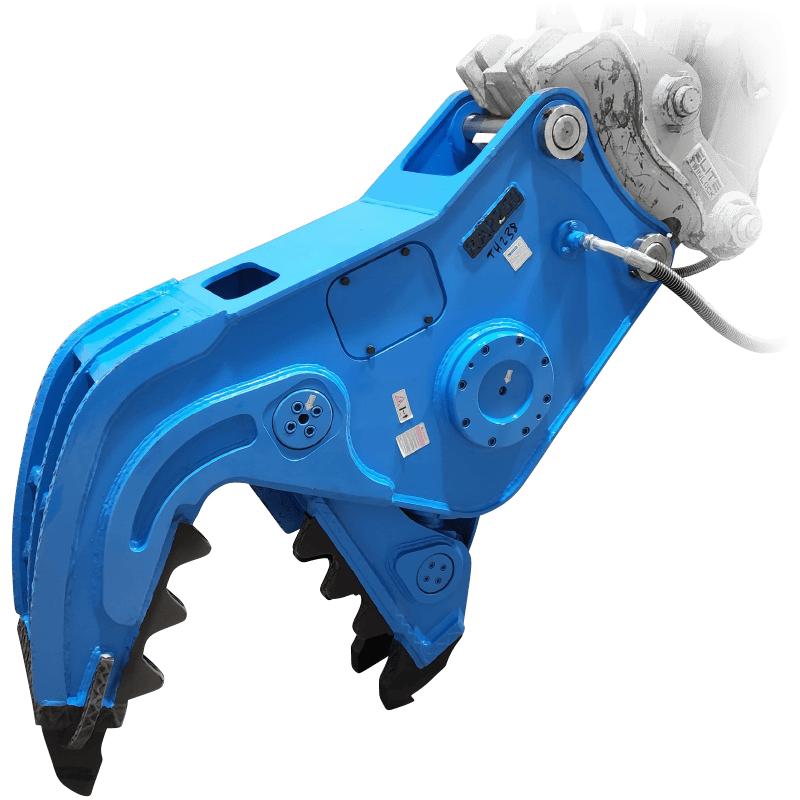
As this type of packaged delivery becomes more prominent, equipment demand must be considered across the program rather than one booking at a time. Excavators, loaders, rollers, attachments and haulage requirements can change quickly as work moves from bulk earthworks into drainage, structures, pavements and finishing works.
Construction equipment is now a recognised supply-chain risk
As construction demand rises, plant availability is no longer sitting quietly in the background of project-capacity discussions.
Infrastructure Australia’s 2025 Infrastructure Market Capacity Report identified construction equipment, including excavators and loaders as a notable supply risk.
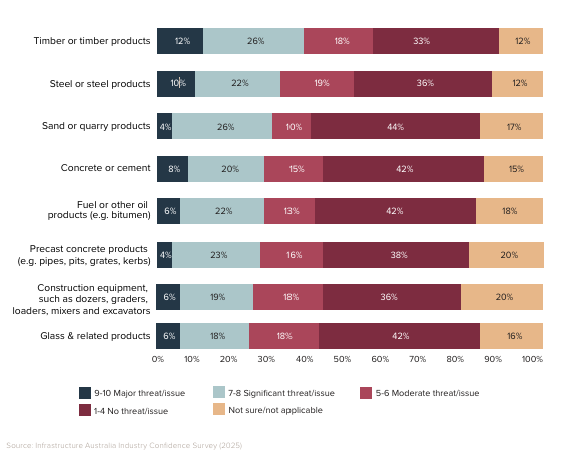
That does not mean every machine category is unavailable or that every project will experience a shortage. It means contractors have less reason to assume a suitable machine, attachment package and support arrangement will materialise at short notice.
“Available” can also be misleading. A machine that is waiting in a yard may still be unsuitable because of its configuration, service status, transport requirements or lack of compatible attachments. What matters is deployable availability: equipment that can be converted into productive site capacity without introducing new complications.
An equipment interruption rarely stays contained to one machine
On an active civil site, machinery operates within a connected production system.
Consider an excavator allocated to a cut-and-load operation. If that machine is unavailable, the issue may extend to the trucks scheduled around its output, the operator assigned to it and the downstream work dependent on the area being cleared. A loader interruption can disrupt stockpile management or material feed. A roller problem can affect testing and the release of the next pavement layer.
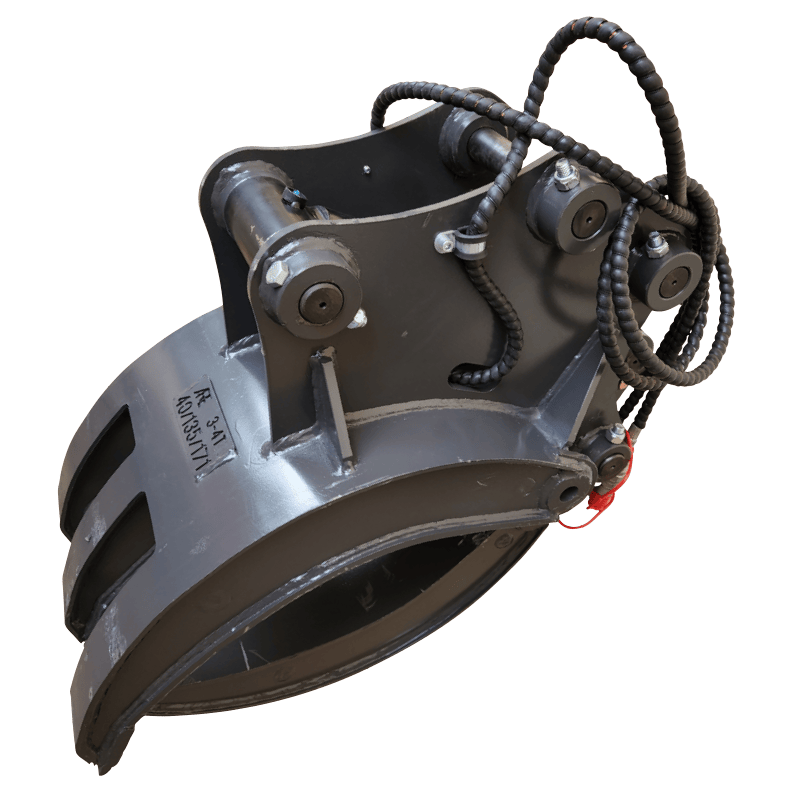
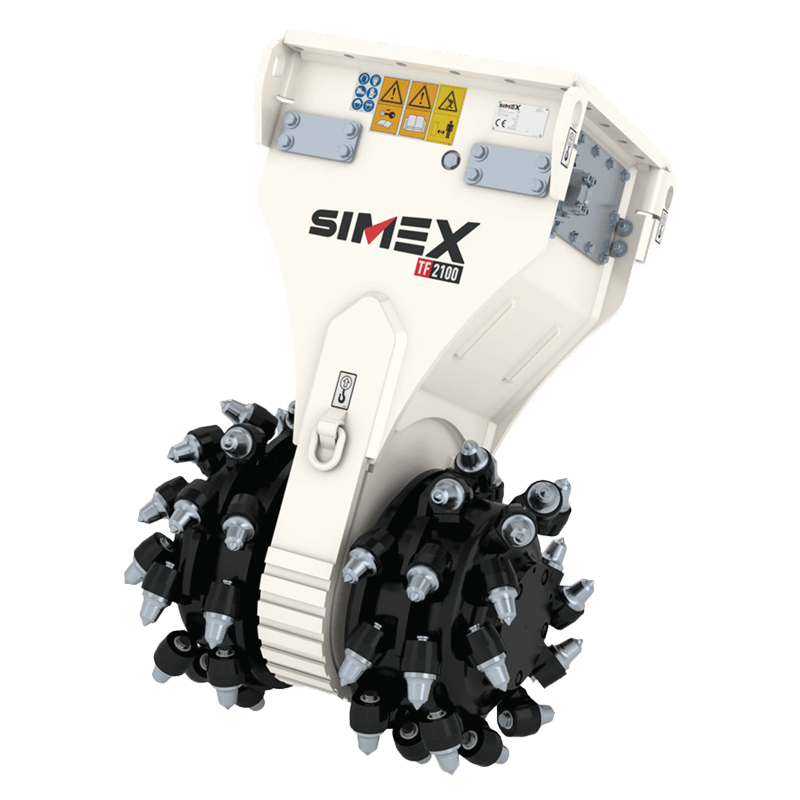
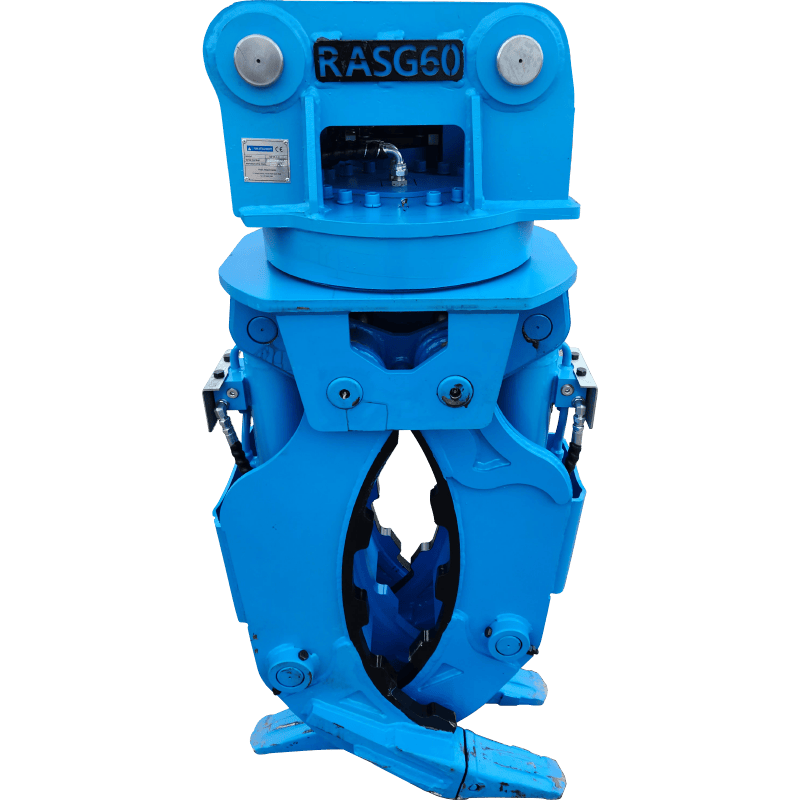
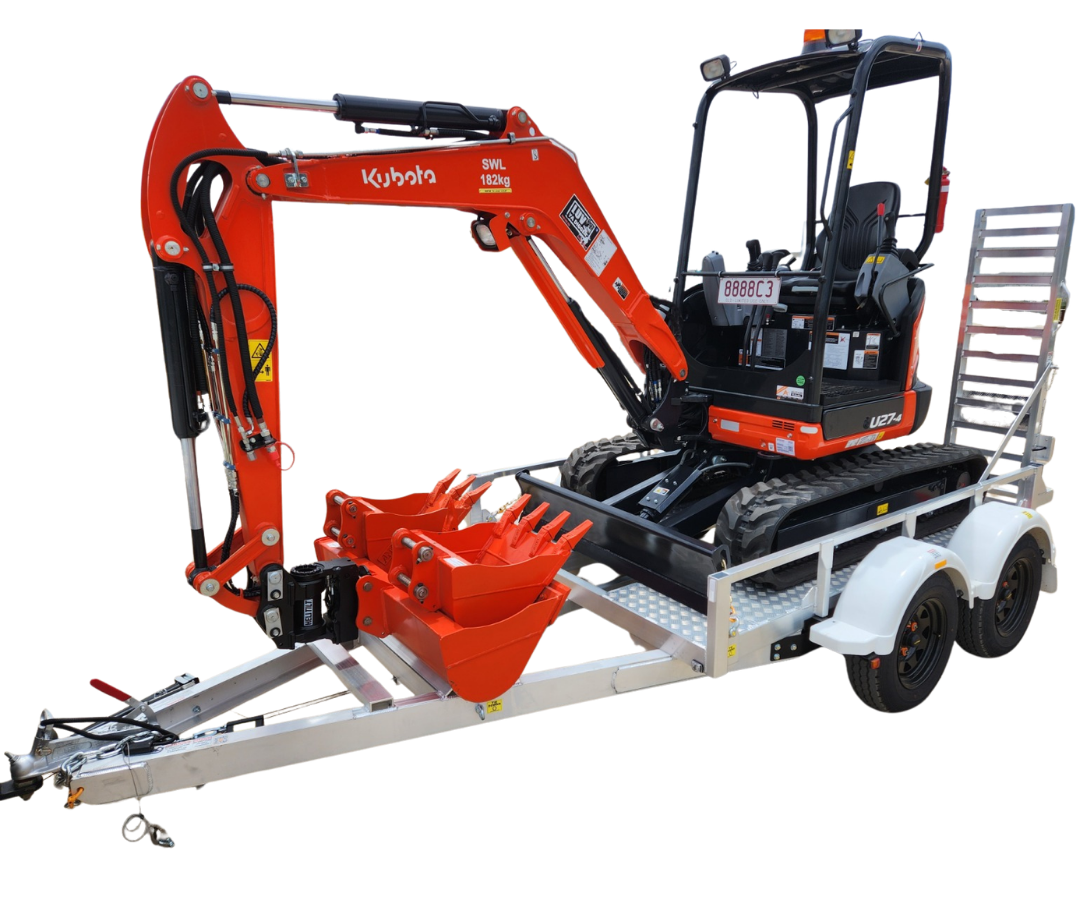
The same applies when the machine itself is functional but the configuration is wrong. An incompatible hitch, missing attachment, unsuitable bucket or unresolved machine-control requirement can leave a capable machine unable to perform the nominated activity.
This is why experienced teams look beyond the hire rate when assessing supply. The relevant commercial question is not simply what the machine costs per day. It is how confidently the complete supply arrangement can support the planned production sequence.
A lower rate offers limited protection if the project must absorb idle resources, lost work windows, resequencing or additional coordination. Conversely, reliable supply creates value by helping the wider workfront operate as intended.
Workforce pressure makes preventable downtime harder to absorb
Queensland’s construction workforce is also expected to remain under pressure. Construction Skills Queensland’s Horizon 2032 report projects an average statewide construction workforce shortfall of approximately 19,100 people across the seven years to 2031–32, assuming current industry-capacity trends continue.
Where experienced people are already a constrained resource, avoidable machine delays become more difficult to carry. Contractors want operators working productively not waiting, while an attachment is sourced, a fault is assessed or an unsuitable replacement is prepared.
Equipment reliability therefore helps protect the value of the labour, supervision and subcontractor capacity already committed to the workfront.

South East Queensland weather can narrow the recovery window
Weather adds another layer to equipment planning.
The Bureau of Meteorology recorded 1,471 millimetres of area-averaged rainfall across South East Queensland during 2024–25—approximately 40% above the region’s long-term average.
Its South East Queensland climate and water assessment also found root-zone soil moisture was very much above average across much of the region during that reporting period. Tropical Cyclone Alfred and its remnants brought widespread heavy to intense rainfall in March 2025.
These conditions demonstrate why contractors need to plan for disrupted and compressed work windows.
Following a weather stand-down, the priority is often to recover production safely and efficiently. That is a poor time to discover a missed service requirement, unresolved defect, delivery problem or attachment mismatch.
A reliable supplier may not be able to remove weather risk but it can avoid adding preventable equipment uncertainty when the project is already managing changed access and ground conditions.
What contractors are prioritising when assessing equipment supply
Fleet size matters, but it is not what contractors are assessing first. The priority is whether a supplier can consistently convert available equipment into site-ready capacity that is correctly configured, properly maintained and supported throughout the hire.
Several capabilities sit behind that outcome.
Machine readiness
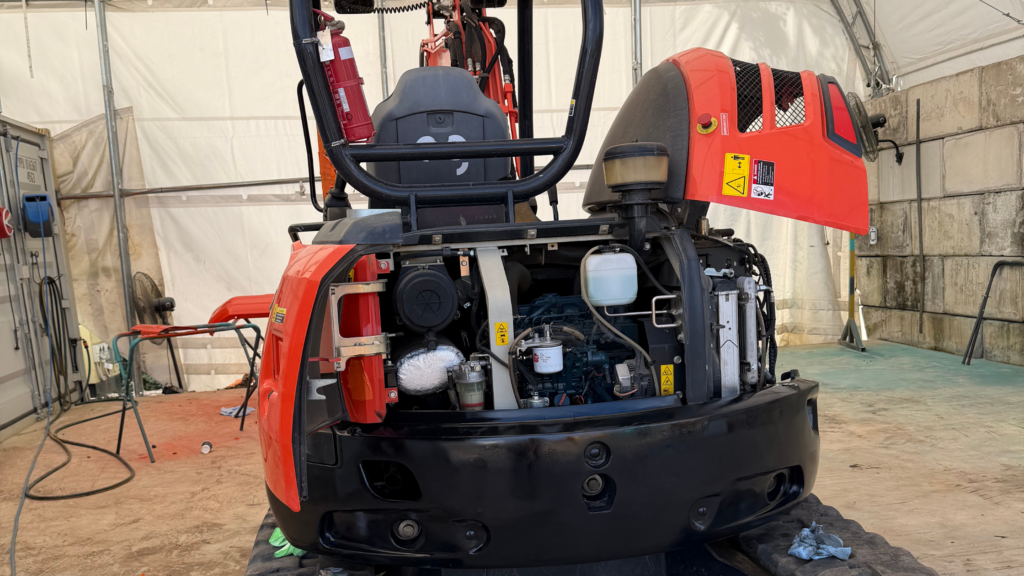
Contractors are assessing whether maintenance, inspections and known defects have been addressed before dispatch.
WorkSafe Queensland states that plant maintenance, inspection and testing must be carried out by a competent person and follow the manufacturer’s recommendations or, where those are unavailable, the recommendations of a competent person.
For the contractor, the practical question is whether the machine is prepared for the intended duty, not merely if it can start, travel and operate during a pre-delivery check.
Correct configuration
Contractors expect the machine class, capacity, couplings, hydraulic requirements, buckets and specialised attachments to be confirmed before mobilisation. Site-specific guarding, safety requirements and GPS or machine-control preparation should also be resolved where applicable.
These details are best handled as part of allocation rather than after the machine reaches site.
Delivery certainty
Transport is part of equipment supply, not an administrative step that sits outside it. Delivery planning may need to account for site access, unloading conditions, vehicle configuration and route restrictions.
TMR provides heavy-vehicle route maps and restrictions, while its guidance on bridge and culvert restrictions makes clear that current route conditions and applicable restrictions must be checked. Consequently, a machine being physically available does not always mean it can be mobilised immediately.
Support continuity
The assessment does not end at mobilisation. Contractors are also evaluating the response pathway once equipment is on site.
That includes who receives fault reports, how technical issues are triaged, what field-service coverage is available and when an uncertain repair becomes a replacement decision.
Planned servicing should be coordinated around production rather than introduced as an unexpected interruption.
Relevant fleet depth
Replacement capacity is only useful when the alternative is genuinely suitable. The replacement must satisfy the task, attachment, access and site requirements, not simply fall within the same broad equipment category.
For projects using several machines across multiple workfronts, contractors also need visibility over future allocations. Fleet depth should support changing requirements, not just the initial mobilisation.
Contractors are planning plant requirements earlier
The response to these pressures is that contractors are focusing on better-timed procurement.
Strong project teams are mapping plant requirements against four-, six- and twelve-week lookaheads, identifying difficult-to-substitute equipment and confirming configuration requirements before the mobilisation date approaches.
They are also giving suppliers earlier notice when sequencing changes. This creates a better opportunity to shift delivery windows, arrange attachments, schedule servicing or redeploy equipment between workfronts.
Supply reliability is jointly created. A capable supplier still needs accurate information about the intended application, program, location, access conditions and project requirements. Equally, the contractor needs honest visibility into allocation, machine readiness and support capacity.
The most productive supplier relationships are, therefore, built around forward communication rather than a sequence of isolated transactions.
Where dry hire fits within a flexible fleet strategy
Dry hire gives contractors a way to add capacity while retaining control of operators, supervision and site systems. It can support temporary production peaks, overlapping workfronts, planned fleet maintenance or access to machine-and-attachment combinations that do not justify permanent ownership.
For contractors coordinating changing requirements across South East Queensland, an established provider of civil dry hire equipment across Brisbane and the Sunshine Coast can add project capacity without requiring the permanent fleet to be structured around every temporary peak.
The hire model creates flexibility. The quality of the supply system determines whether that flexibility translates into dependable production capacity.
Reliability is ultimately about protecting production certainty
No equipment supplier can remove every breakdown, weather event or program change. Contractors are not looking for impossible guarantees.
They are looking for fewer avoidable surprises.
As South East Queensland’s construction pipeline becomes larger and more concurrent, reliable supply increasingly means receiving the correct machine, properly prepared, at the agreed time with a support and replacement pathway that stands up once the equipment is on site.
That is why the conversation is shifting. The question is no longer only whether a machine can be hired. It is whether the complete supply arrangement can help protect the workfront when labour, access windows and schedule float are already under pressure.