

Real Conversations on Site: Supporting Mental Health in Construction
In the civil and construction industry, looking out for your mates has always been part of the job. From identifying safety risks to helping get a project across the line, teamwork is at the core of everything we do.
But when it comes to mental health in construction, those conversations have not always been as visible.
This National Tradies Health Month, the focus is on “Real Conversations” — encouraging workers across the industry to check in, speak up, and support one another both on and off site.
Why Mental Health Matters in Construction
The construction and civil sector is known for its demanding conditions. Long hours, physically intensive work, project pressure, and time away from family can all impact mental wellbeing.
Research consistently shows that tradies face higher risks of stress, burnout, and mental health challenges compared to many other industries.
That is why creating a culture of open communication on site is just as important as physical safety.
Sometimes, the most effective support starts with a simple conversation.
How to Check In on Your Mates on Site
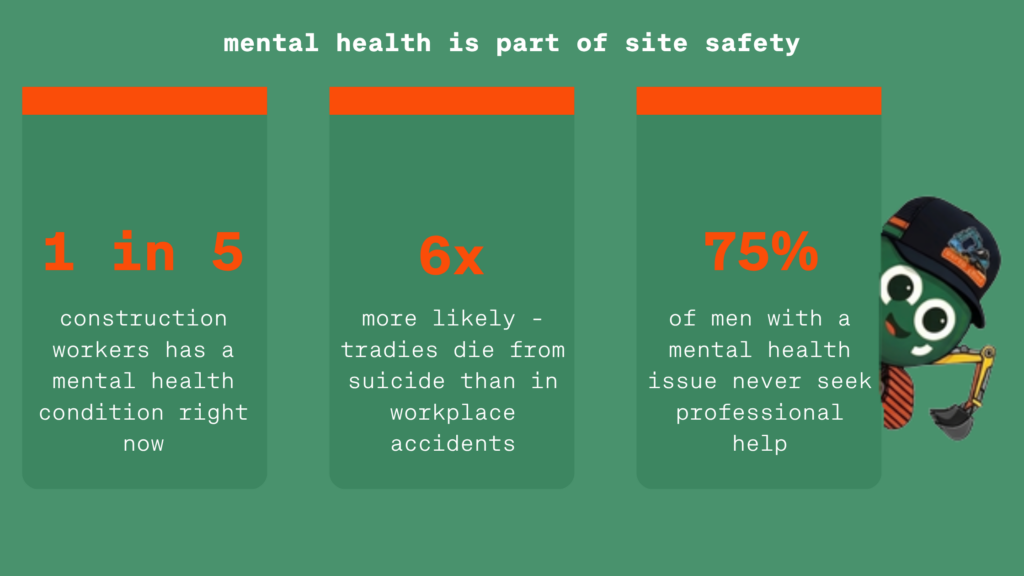
Starting a conversation about mental health does not need to feel forced or formal. In fact, the best check-ins often happen naturally during the workday.
Here are practical ways to support your crew:
- Ask twice and listen properly. If something feels off, follow up rather than accepting a quick “I’m fine.”
- Keep conversations casual. A chat during smoko or while working side-by-side can make it easier for someone to open up.
- Listen without trying to fix everything. Being present and understanding goes a long way.
- Look for changes in behaviour. Fatigue, withdrawal, or mood shifts can be early warning signs.
- Follow up regularly. Ongoing check-ins build trust and show genuine support.
These small actions can make a significant difference in supporting mental health in the construction industry.
Building a Mentally Healthy Worksite Culture
Real conversations only happen in environments where people feel safe to speak up. Creating that culture starts with leadership and is reinforced across every level of a project.
On civil and construction sites, this can include:
- Normalising conversations around mental health
- Encouraging supervisors to lead by example
- Including mental wellbeing in daily safety discussions
- Reducing stigma around asking for help
When mental health is treated as part of overall site safety, it becomes embedded in how teams operate.
How earth gear Supports Employee Wellbeing
At earth gear, supporting our team goes beyond delivering reliable equipment solutions. We recognise that strong teams are built on both physical safety and mental wellbeing.
That is why we provide all employees with access to an Employee Assistance Program (EAP).
Our EAP offers:
- Confidential counselling services
- Support for personal and work-related challenges
- Access to qualified professionals
- Flexible support outside of standard work hours
This ensures our team has access to professional help when they need it, whether they are dealing with stress, financial pressures, or personal challenges.
Importantly, it provides another pathway for support, recognising that not everyone feels comfortable opening up on site straight away.
Supporting Tradies Starts with Conversation
This National Tradies Health Month, the message is clear: real conversations can save lives.
Checking in with your mates, creating a supportive work environment, and ensuring access to professional support services are all critical steps toward improving mental health in construction.
At earth gear, we are committed to supporting our people and encouraging a culture where speaking up is seen as strength, not weakness.
Because in this industry, looking after your mates is part of doing the job right.
Tradie mental health is a national crisis hiding in plain sight. Every two days, an Australian construction worker dies by suicide — more than those killed in workplace accidents. That stat alone should stop you in your tracks. This August, earth gear is doing something about it, and we want the whole industry to get behind it.
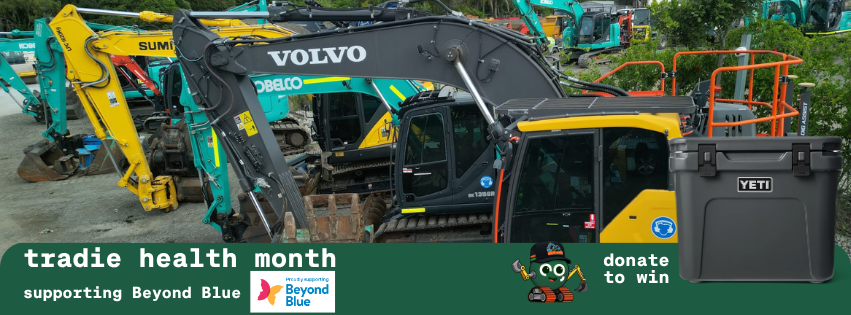
We’re supporting Beyond Blue throughout Tradie Health Month — all of August 2026. Our goal is to raise over $3,000 for Beyond Blue, and we’re matching every single donation made through earthgear.com.au/charity. Every dollar you put in, we’ll double it. Plus, every donation enters you in a draw to win a Yeti 32L Portable Esky valuded at $500. T&Cs apply.
This isn’t about ticking a box. It’s about the blokes next to you on the tools every day.
Why the construction industry has a mental health problem
Construction worker mental health in Australia is in a worse state than most people realise. Australian male construction workers have a suicide rate of 26.6 per 100,000 — more than double the rate of other employed males at 13.2 per 100,000, according to research published in Scientific Reports. That’s not a blip — it’s a systemic issue.
Construction workers are six times more likely to die from suicide than from a workplace accident. We spend billions on physical safety on site. Hard hats, harnesses, safety boots. But mental health? That conversation has been harder to start.
The reasons are layered. Long hours. Job insecurity. Working away from family. A blokey culture that treats “toughing it out” like a virtue. Financial pressure. The 3AM Project estimates construction workers across Australia have suicide rates 84% higher than non-construction workers. A UWA study from 2024 found suicidal thoughts among construction workers run at roughly three times the rate seen in the general adult population.
The numbers are confronting. But they’re not a reason to give up — they’re a reason to act.
If you’re struggling yourself
Recognising when things aren’t right
The first step is knowing what to look for in yourself. The signs aren’t always obvious — it’s rarely someone sitting in a corner crying. More often it looks like this:
- You’re flat — not sad exactly, just nothing feels worth getting up for
- You’re angrier than usual — snapping at workmates or your family over small things
- You’re numbing out — drinking more, smoking more, gaming until 2am
- You’re not sleeping — or you’re sleeping all day and still exhausted
- You’ve gone quiet — pulling back from the group, eating lunch alone in the car
- You’re taking more risks — on site or on the road, like you don’t care
Any of these can be a sign your brain is under load, not just that you’re tired.
What you can actually do
Reaching out doesn’t mean booking a therapist (though that’s an option). There are smaller steps that work:
- Tell one person — a mate, a family member, your partner. Just “I’ve been doing it tough lately” is enough to start.
- Call Beyond Blue — 1300 22 4636, free, 24/7, confidential. You can also chat online at beyondblue.org.au. The people on the other end understand blokes in trades.
- Get your GP on board — a Mental Health Care Plan gets you access to up to 10 subsidised psychology sessions per year. It costs nothing and it’s between you and your doctor.
- Cut back on the booze — construction workers drink at double the national average rate of “life-threatening drinking.” Alcohol is a depressant. It helps in the short term and makes everything worse in the long term.
- Move your body off the tools — a walk, a swim, the gym, anything that isn’t work-related movement. It genuinely helps.
The single most important thing: don’t wait until it gets worse. The earlier you deal with it, the easier it is.
If you’re a foreman or site supervisor
How to actually check in with your crew
The best thing a foreman can do for their crew’s mental health is make it normal to talk — not by forcing deep conversations, but by being present and paying attention. You don’t need a script. You need to mean it.
Signs someone on your crew might be struggling:
- Unusual absences or a pattern of calling in sick on Mondays
- Drop in work quality or concentration — uncharacteristic mistakes
- Keeping to themselves, skipping smoko with the group
- Short fuse — reacting hard to small stuff
- Looking rough — tired, not taking care of themselves, hungover frequently
Practical ways to check in:
- Use the side-by-side conversation — don’t sit across a table from someone. Walk the site together, have the chat while you’re doing something else. It’s less confrontational and blokes talk more.
- Ask twice — “How you going?” gets “yeah, good.” Try: “Nah, but seriously mate — how are you actually going?” Most people will open up if you give them the space.
- Make it about the whole team — talk about it at the toolbox talk. “We’re doing Tradie Health Month this August. Mental health is real on site, and if any of you are doing it tough, I want to know about it.”
- Know your resources — stick the Beyond Blue number (1300 22 4636) on the site noticeboard or add it to your site induction docs. Normalise its existence.
- Follow up — if someone tells you they’re struggling, check back in a few days. “Hey, how’s things?” It matters more than you think.
One conversation can save a life. That’s not an exaggeration.
If you’re a manager or business owner
Building a mentally healthy workplace — practical stuff you can do this week
A mentally healthy workplace reduces accidents, absenteeism, turnover and workers’ compensation claims. It’s also just the right thing to do. Work-related mental health conditions cost Australian employers approximately AUD $543 million per year in workers’ compensation alone.
Here’s where to start:
This week:
- Add the Beyond Blue number to your site induction documents and toolbox talk templates
- Nominate a “mental health champion” on site — someone the crew trusts and respects
- Donate to earthgear.com.au/charity and show your team you take this seriously
This month:
- Run a toolbox talk specifically on mental health — use the free resources at beyondblue.org.au/workplace
- Review your leave policies — are they making it easy or hard for someone to take a mental health day without shame?
- Ask your supervisors what they’re noticing on site. They’re closest to the crew.
Ongoing:
- Create a culture where it’s normal to talk. This happens through leadership modelling — if the boss talks openly about pressure and stress, so will the team.
- Address bullying and hazing on site fast. These are significant risk factors. A 2024 UWA study found workplace bullying was directly linked to suicidal ideation in construction workers.
- Look at what you can control: unrealistic deadlines, excessive overtime, and lack of job control are documented drivers of mental ill-health. Sometimes the best mental health policy is fixing the workload.
You don’t need a formal wellness program to start making a difference. You need to give a damn and act on it.
Get help right now
Beyond Blue Support Line: 1300 22 4636
Free. Available 24/7. Confidential. Online chat also available at beyondblue.org.au.
If you or someone you know is in immediate danger, call 000.
FAQ: tradie mental health in Australia
What is Tradie Health Month?
Tradie Health Month runs throughout August every year and is focused on the physical and mental health of tradespeople. The 2026 campaign theme is “Wear the Conversation” — encouraging tradies and workplaces to normalise conversations about health. Earth Gear is supporting Beyond Blue during August 2026 with a donation-matching campaign at earthgear.com.au/charity.
Why do construction workers have higher rates of mental health issues?
Construction workers face a combination of risk factors that other industries don’t: physically demanding and dangerous work, job insecurity and contract-based employment, long hours and time away from family, a workplace culture that stigmatises vulnerability, financial pressure, and limited access to support services on site. Australian male construction workers have a suicide rate more than double that of other employed men, according to research published in Scientific Reports.
Is suicide the leading cause of death in construction?
Yes. Construction workers are six times more likely to die from suicide than from a workplace accident, according to SafeWork NSW. In Australia, we lose approximately one construction worker to suicide every two days.
What is Beyond Blue and how can they help tradies?
Beyond Blue is one of Australia’s most trusted mental health organisations. They provide free information, support, and referrals for anyone dealing with anxiety, depression, or thoughts of suicide. Their 24/7 support line is 1300 22 4636 — free, confidential, and available any time of day or night. They also have specific workplace and industry resources at beyondblue.org.au.
How do I know if a workmate is struggling with their mental health?
Look for changes in behaviour: pulling back from the group, unusual irritability or anger, declining work quality, more frequent absences (especially after weekends), increased drinking, taking more risks, or making dark jokes about not being around. If something feels off — trust that instinct. Ask them twice, in private, and listen without trying to fix it.